
Interview with Ekkehard Nuissl
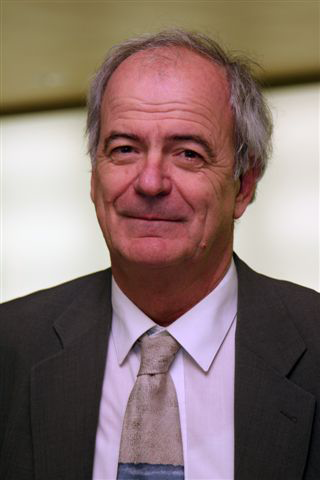
Arne Carlsen: Ekkehard, you will be 80 years old in June. You look back on more than fifty years of engagement in Adult Education – five years ago you published a book with the title “Keine lange Weile” (“No Tediousness”), collecting several of your articles out of 50 years. And with the message: Adult Education has never been boring. All in all, an active and full worklife. You are known to have advanced the academic field of adult education, and strengthened it as a discipline. One might see you as a research system-builder. If you would have to summarize: what do you consider to be your biggest achievement?
Ekkehard Nuissl: That is always a difficult question, the one about the superlative, because the answer depends on the criteria by which one evaluates. The problem lies also in the different meanings of the term achievement, such as performance, success, benefit, or output. If I take several of these criteria together and also consider personal involvement my answer is, however, clear: Vision and realization of the German Institute for Adult Education (DIE), now based in Bonn.
When I was asked to take over the directorship of the "Pädagogische Arbeitsstelle" (PAS) – I acted as director of the second biggest German adult education center in Hamburg at that time – I had the vision to transform this little expert group placed inside one association of adult education (Deutscher Volkshochschulverband, DVV) into a central, overall active and scientifically based institute in Germany, publicly financed (1991). Within only five years I managed to realize this vision together with my colleagues by changing the organizational structure, the working culture, the products and projects, the qualifications of the staff, the administration, the collaborative network with all organizations of adult education in Germany and the acceptance and awareness of the institute. We changed its name to “German Institute for Adult Education” (DIE), declaring the intended role, worked on corporate identity and increased research activities and programs. Finally, I brought the institute as member in the big research organization “Leibniz-Gemeinschaft”, where I became elected as Vice-President for several years. And, not to forget, I internationalized the work of the DIE strongly, within the European Union and international research organizations in the field. And all this was a fight against the DVV and its interest in keeping the institution for its benefit.
Research orientation and openness to all adult education were ultimately the key words for my vision of the Institute of Adult Education in Germany. That is exactly what it is today, almost three times as large as it was thirty-five years ago, sought after in all relevant matters of adult education, with profound contributions to science, innovations in practice, and strong international networking. I am sure that without these changes, the institute would not exist anymore. Ultimately this was a management achievement but based on a profound understanding of adult education and its individual and societal significance.
AC: How would you describe the relationship between your roles as manager, researcher, scholar, involved in so many political activities and requirements? And mainly, how did you combine your work as CEO of a research institute with the work as university professor?
EN: The term "role" is very apt here, Arne. There are completely different demands that one must meet in teaching students and adults, in leading an institute, in negotiations with the political administration, in research, and in communication thru lectures and publications. The responsibility is different, the language is different, the goals are different, the required competencies are different. The available and required time also changes each time, as does the relationship with the people one is dealing with. This is also reflected in outward appearances: the solid bureaucratic demeanor required in the ministry is perceived by students as foreign, as strange, and the casual clothing of a researcher is often not compatible with the seriousness of personnel management or representing an institution.
I always felt it was important to always be the same person, to act authentically. An indispensable prerequisite for this was the content I was concerned with, adult education, and my goals within it and for it. For example, I was able to convey the goals of quality and professionalism in adult education in teaching, negotiate in the political arena, implement research concepts and projects, and base my leadership and advice to my employes on these principles. Of course, one must always adjust according to the context, which requires reflection and empathy. And of course, the activities in such a broad field of action often require effort, not to mention the enormous amount of time needed.
AC: And which of these diverse activities did you like more or most?
EN: It's hard to say in general. The collaboration with my colleagues was stimulating and, in terms of the results, mostly very satisfying. In teaching, experiencing how others absorb something and teach me in turn brings joy. Achieving goals in negotiations, initiating projects and their funding, and getting to the point in a publication – I liked and still like that very much. But most of all I liked doing research. My step into adult education was as chair of an empirical research program on educational leave, the biggest one in adult education at this time, and both was fascinating: adult education and doing research. We were the first to analyse in a triangulated way pedagogical processes, analysing aspects of form and content in a holistic way, this meant pushing forward the knowledge about learning of adults. Many of my research projects (and of a lot of colleagues) following based on this approach to pedagogical reality, to learning in an social and interactive way. Of course, it is also significant how serious negative processes and outcomes are, a poor publication, a failed project, unsuccessful teaching activities, setbacks in the political field. Overall, I would say that I usually particularly liked activities when not only the matter but also the people were important, and when societal relevance was combined with new insights, based on research. And such activities where language, written or spoken, played an important role.
AC: What was your motivation to step into Adult Education? How and when did this pop up?
EN: I was always dedicated to language, as a child and at school. My first qualification is journalist, and I worked for a short time at a newspaper (mid 1960s). But I wanted a scientific background, more going in depth. I started to study german languages in Heidelberg, switched slowly to sociology and communication in general, my doctoral thesis is about mass communication. An empirical study, I became expert in empirical methods, quantitative as well as qualitative. Looking for work after university I got a job as specialist for empirical methods in an institute in Heidelberg, which was focused on research in adult education (1974). I was fascinated by the work with adults, by this way of interaction, by using communication in a didactical way. Some years later I was called by an university to be professor for communication, but I denied. Adult Education was already more attractive and meaningful for me than communication and mass media. I became elected as director of this institute in Heidelberg and remained there for more then ten years. My final step in scientific qualification, in Germany the “Habilitation”, I made in learning of adults in museums (1987), this was like completing my way into adult education. And happily I had the chance to get experience in the practice of adult education also, when I became appointed director of the community center in Hamburg.
AC: We met first time at the first European Conference on Adult Education, which took place 1994 in Athens. This was two years after Adult and Continuing Education was put on the common political agenda in Maastricht. I remember wonderful sunny days with pleasant events and meetings, but also a lot of work and agreements on further work. In the following years was launched the European action on adult education with a lot of international projects, and these were evaluated in 1999 by an international group of experts, chaired by you – I was member of this group too. We practiced an innovative way of “Monitoring by discourse” (MOPED), trying to combine the different views on adult education. How would you today describe the work in the project and the importance of its outcome?
EN: The Maastricht Treaties undoubtedly had a significant impact on adult education in many European countries. They not only opened up space for the promotion of adult education through projects but also for joint concepts and programs, as they were agreed upon in the following decades through standards such as the qualification framework, the opening of educational pathways, the formulation of benchmarks, and the recognition of competencies across Europe. In these early years of the European continuing education space, it was more about innovative impulses, the exchange of experiences, and the search for a "best practice" to solve problems, such as in cultural and political education, education with migrants, or reaching educationally disadvantaged target groups. In our MOPED project, we have uncovered many fascinating projects and successful approaches that have borne fruit in the subsequent years of European adult education. In addition to this substantive work, what was particularly impressive and groundbreaking for me personally was how we, with our different perspectives and backgrounds – we were a group of experts from the UK, France, Denmark, Germany, Greece, Italy, Switzerland, and Spain – were able to reach common assessments. Linguistically, the group was also highly interesting; depending on the content and the personnel configuration, English, French, German, Italian, and Spanish were spoken. A wonderful example of the added value of linguistic and cultural diversity in Europe. A kind of summary of this I have in the essays.
AC: What do you consider to be the impact on German or European adult education of your work, through or outside of the DIE?
EN: The impact of my work in Germany can primarily be answered in connection with the institutions I have led over the past decades. These are the Heidelberg Research Institute (AfeB) in the 1970s and 1980s, the Hamburg Adult Education Center in the transition to the 1990s, and the German Institute for Adult Education until 2011. Many research activities led by me at the Heidelberg Institute laid scientific foundations in the still young field of adult education, including work on disadvantaged target groups, short-term educational measures (educational leave), model experiments, and cultural and political education (such as museum education). I transformed the Hamburg Adult Education Center from a government department into an independent operation (book "Operation Instead of Authority"), a model for many adult education centers in the 1990s, and the DIE, under my leadership for twenty years, has provided important impulses for institutional and pedagogical further education as well as for professionalism and quality. Fundamentally, this institute, including myself, has significantly increased the political importance and cooperation in adult education as well as its visibility, advanced international integration, and played a strong role in the development of adult education across Europe.
AC: How do you see, after all, the position of Adult Education in Germany in a European and a global perspective? Do you think that there is a sufficient political and scientifical backing for adult education in Germany, in other states and internationally?
EN: German adult education, simply put, stands well in international comparison. It is institutionally well-founded, has a vibrant and innovative educational culture, and a high level of professionalism and quality. Compared to some Nordic countries, there is still "room for improvement," especially in the benchmarks of participation rates, but in terms of breadth and substance, it is quite impressive, both for vocational and general education. However, state and municipal support is highly expandable, often the financial burden on learners is too high, and there is a stagnation as well as a partial relative decline to be observed. I sincerely hope that an improvement will be seen here in the coming years; unfortunately, politics is currently focusing less on educational issues and more on military rearmament. Scientifically speaking, the Federal Republic of Germany – compared to many other countries from a global perspective – is relatively well-equipped; there are chairs for adult education at dozens of universities, and the central scientific institute for adult education in Germany, the DIE, has well over a hundred employees, and the UNESCO Institute for Lifelong Learning, with its headquarters in Hamburg, also has a significant impact. However, there has been stagnation here for two decades, if not a slight decline. Internationally, German adult education has become significantly more active since the Maastricht Treaties, with a large number of European practical projects taking place, many representatives of German adult education in science and practice working in prominent positions in international organizations, and the international work of the German Adult Education Association, state-funded, being of great global importance and having demonstrably led to the establishment of sustainable continuing education activities in many countries.
AC: In 2006 you were inducted into the HoF. And you were also on the board and on the election committee for some periods. How do you estimate the character and the role of this organization?
EN: Being inducted into the Hall of Fame was a great honor for me. The selection criteria for admission are very precise, they are applied strictly (I know very well from my work in the election committee), and the members of the organization are all outstanding experts in adult education from all over the world. I think that HoF sustainably emphasizes the importance of adult education from a global perspective and, through the gathered competencies, also documents the credibility of this educational field in both science and practice. From the knowledge, experiences, and status of the members, more could be achieved if suitable formats for scientific discourse, project development, and political consulting could be developed. We have established a European section for this purpose, where indeed a more intensive collaboration has developed in recent years. It would be desirable for this to solidify and also be realized in other global regions or in specific contexts.
AC: What do you like most about all the activities you carried out in the recent 50 years?
EN: Working with people, within the organization, in the field, conveying something to young people, students, and not least one's own enthusiasm for education and adult learning. Being able to contribute to the most diverse aspects of this educational field and to make these contributions accessible to a broader professional audience in written form (articles, books, teaching texts). To be able to initiate programs and projects, to learn new things and set them in motion. But above all the research work, seeing the benefits of it in the reality of adult education, especially the international workin a team, in a peer group, to reflect on and initiate political and practical developments. And to enjoy the broadening of horizons that comes from discussing in other languages, engaging with different cultures, or teaching in other places, as I have done, among others, in Italy, Romania, Poland, but also in China and India. This is what I am missing most in my retirement now.
References
Educational leave and labour market in Europe, Luxembourg 1984.
Adult Education and learning in Europe. Evaluation of European projects, Brussels/Frankfurt-Main 1999 (with A. Carlsen et. al).
Keine lange Weile. Texte zur Erwachsenenbildung aus fünf Jahrzehnten, Bielefeld 2017.
Adult Education in the European Union since 1993, in: European Journal of Education 59, 4 (2024) (with E. Farkas, S. Sava).
Last update
12.06.2026